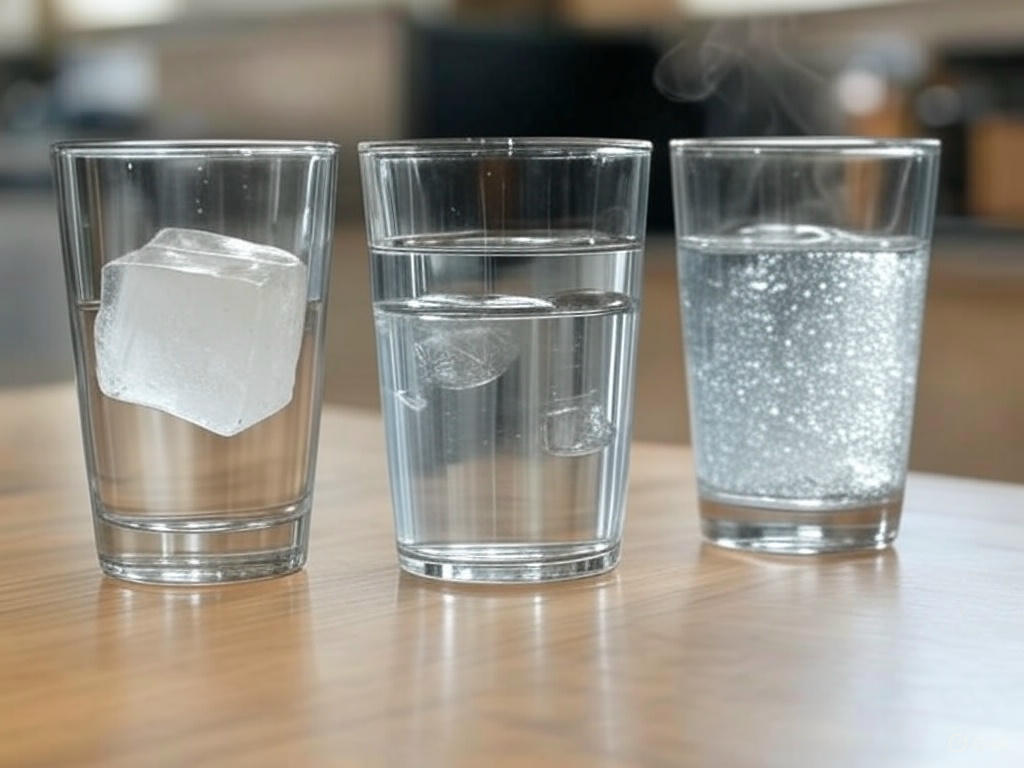
Have you ever wondered why ice stays solid, water flows, and steam floats away? It’s all because of states of matter! These are the three main ways stuff exists around us: solids, liquids, and gases. Think of them as the superheroes of chemistry, each with its own special powers. Whether it’s your skateboard, a glass of juice, or the air you breathe, everything is matter, and matter loves to show up in these forms. Let’s take a fun ride through the world of states of matter and discover how they work. It’s like a treasure hunt where molecules are the clues!
What Are States of Matter?
Imagine tiny bits called molecules as kids at a party. In a solid, they’re hugging tightly, barely moving. In a liquid, they’re sliding around, bumping into each other. In a gas, they’re zooming everywhere, like they had too much candy! States of matter are how these molecules act based on how much energy they have, usually from heat.
The same stuff, like water, can be a solid (ice), a liquid (water), or a gas (steam). It all depends on how much energy you give those molecules. Let’s meet each state and see what makes them awesome!
Solids: The Strong and Steady
Picture a Lego tower or a rock. Solids are a state of matter where molecules are packed super close, like sardines in a can. They wiggle a tiny bit but stay in place, which is why solids keep their shape.
- Examples: Your desk, a spoon, or even a shiny gemstone.
- Why it matters: Solids are in everything sturdy, like your house or your backpack.
- Fun fact: According to National Geographic, some solids, like glass, can act like very slow liquids over centuries!
Solids are like the dependable friend who never changes plans. You can trust a solid table to hold your books without wobbling.
Liquids: The Flowy Pals
Think about pouring lemonade into a cup. Liquids are a state of matter where molecules are close but can slide past each other, like kids in a water slide. This makes liquids flow and take the shape of their container.
- Examples: Water, soda, or even honey (it flows slowly!).
- Why it matters: Liquids are vital for life. Your body is about 60% water, says USGS.
- Quick tip: Try pouring water from a cup to a bowl. It changes shape but stays the same amount!
Liquids are flexible and fun, always ready to adapt. But what happens if you heat them up? Let’s find out!
Gases: The Wild Wanderers
Gases are the state of matter where molecules are far apart and zooming around like hyper puppies. They don’t have a fixed shape or volume, so they spread out to fill any space.
- Examples: The air you breathe, helium in balloons, or steam from hot soup.
- Why it matters: Gases make up our atmosphere. Oxygen (21% of air) keeps us alive, per NASA.
- Cool analogy: Imagine gases as a swarm of bees buzzing freely.
You can’t always see gases, but you feel them. Blow air into a balloon, and you’re trapping gas inside. Pop it, and those molecules escape!
States of Matter: Molecule Motion
Solid (Fixed)
Gas (Wild!)
How States of Matter Switch Places
Here’s the exciting part: matter can change between solids, liquids, and gases by adding or removing energy, usually heat. It’s like matter has a costume closet! Here’s how it works:
- Melting: Heat a solid (like ice), and molecules vibrate more until they become a liquid (water) at the melting point (0°C for water).
- Freezing: Cool a liquid, and molecules slow down, locking into a solid, like ice in a freezer.
- Evaporation: Heat a liquid, and some molecules zip off as a gas. That’s why wet clothes dry in the sun.
- Condensation: Cool a gas, and molecules slow down, forming a liquid. See water droplets on a cold glass? That’s condensation!
These changes are matter’s superpower. Water can be ice, liquid, or steam, all while being the same molecules.
Why States of Matter Matter to You
You might wonder, “Why should I care about states of matter?” Because they’re everywhere! Here’s how they show up in your life:
- Cooking: Boiling water for noodles turns liquid to gas. Freezing juice makes solid popsicles.
- Weather: Rain (liquid), snow (solid), and water vapor (gas) shape our climate.
- Science: Engineers use solids for bridges, liquids for cooling, and gases for rockets.
Understanding states of matter is like having a map of how the world works. Plus, it’s fun to spot them in action!
Try This: A States of Matter Experiment
Want to play scientist? Here’s a safe experiment to see states of matter:
- Take an ice cube (solid water).
- Put it in a pot and heat it gently (ask an adult to help).
- Watch it melt into liquid water.
- Keep heating until you see steam (gas).
You just saw water switch states! Heat gave the molecules energy to move more. Check out this guide on matter experiments for more fun ideas.
Fun Facts About States of Matter
Here are some extra tidbits to wow your friends:
- Plasma: A rare state of matter, like lightning or neon signs, where molecules are super energized. Learn more here.
- Bose-Einstein Condensate: A super cool state where molecules almost stop moving, created in labs. It’s like matter taking a nap!
- Diffusion: Gases mix easily because their molecules zoom around. That’s why you smell cookies baking from across the room.
These facts show how wild and wonderful states of matter can be!
How to Spot States of Matter Every Day
You don’t need a lab to see states of matter. Look around:
- At home: Your bed (solid), juice (liquid), and air freshener (gas).
- Outside: Rocks (solid), puddles (liquid), and wind (gas).
- At school: Your pencil (solid), water bottle (liquid), and the air in a blown-up balloon (gas).
Try keeping a “matter journal” for a day. Write down every solid, liquid, and gas you see. You’ll be amazed how many you find! For more tips, read our guide to chemistry for kids.
Wrapping Up: Your States of Matter Adventure
Let’s recap our journey. States of matter—solids, liquids, and gases—are the three ways stuff exists. Solids are sturdy because molecules are tight. Liquids flow because molecules slide. Gases are free because molecules zoom. By adding or taking away heat, matter switches states, like water going from ice to liquid to steam. You see states of matter in cooking, weather, and even your body!
Now you’re a matter expert. Next time you eat ice cream, drink soda, or feel the breeze, think about the states of matter at work. Want to keep learning? Try the experiment above or visit Science Kids for cool activities. The world of matter is full of surprises, and you’re ready to explore it!
